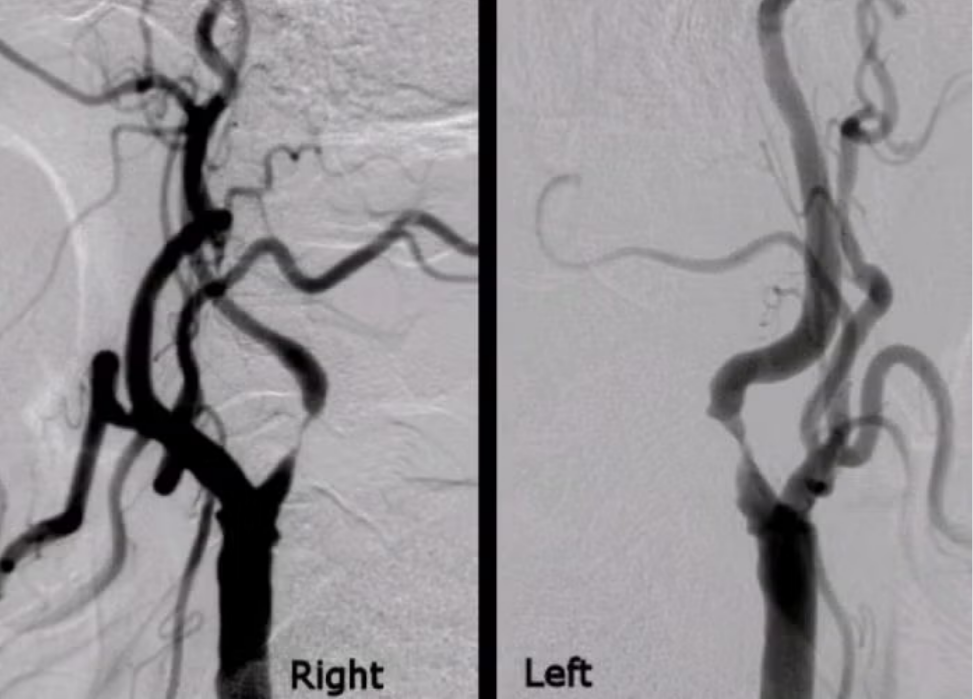
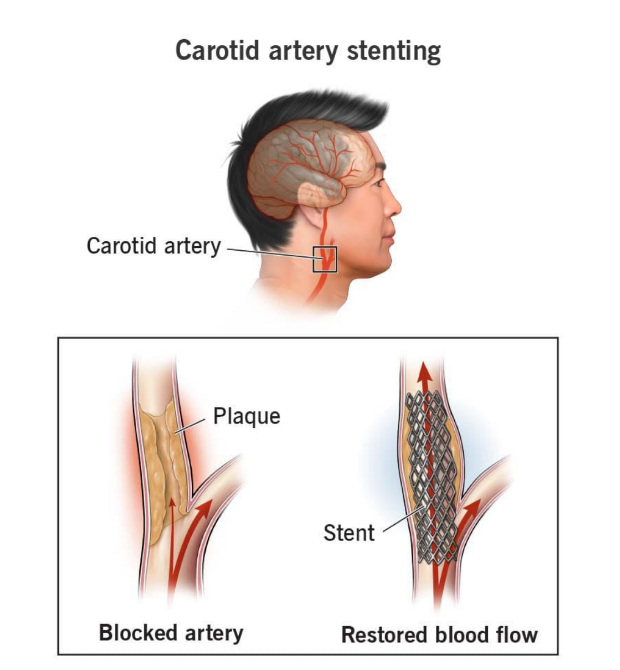
Carotid Stenting is a minimally invasive procedure performed to treat narrowing (stenosis) of the carotid arteries — the main blood vessels supplying blood to the brain. Significant narrowing can reduce blood flow or cause clots to travel to the brain, increasing the risk of stroke.
🔎 Why It Is Done:
Severe carotid artery narrowing (>70%)
Transient ischemic attack (TIA)
Minor stroke with carotid blockage
High surgical risk for open surgery
⚙️ How the Procedure Is Performed:
A thin catheter is inserted through an artery in the wrist or groin and guided to the narrowed carotid artery under real-time imaging (angiography).
A small balloon may be inflated to widen the artery (angioplasty).
A metal mesh stent is placed to keep the artery open permanently.
A special protection device is often used to prevent clot fragments from reaching the brain.
✅ Benefits:
No open neck surgery
Short hospital stay
Faster recovery
Effective stroke prevention
Carotid stenting is especially beneficial for patients who are at high risk for surgical carotid endarterectomy. Early detection and timely treatment can significantly reduce the risk of major stroke.